Autobiography of Charles William Grant, b.1881


This story is a first person document written by C.W. Grant, my grandfather, in 1961, when he was 80 years old. I have edited it in order to make it more readable. The original was a combination of typed and handwritten documents, quite rambling, and in many places duplicated. The originals have no paragraphs, which makes them even more difficult. In many ways he presents, or attempts to present, himself in a way that was at odds with picture that I hold in my mind of him, and what I know of his life in reality.
I
suppose inevitably we all wish ourselves to be seen, or remembered in a way
that does not necessarily agree with what actually happened to us in life,
and how our relationships with other people actually fared. His words also
suffer from the sin of “omission”, in other words he fails to mention things
that may alter how people viewed him. In particular he does not mention the
fact that his grandparents, Stephen and Mary Ann Grant, were gatekeepers on
the Ashtown estate at Woodlawn in
So on to the autobiography:-
I am putting down the following which may be of interest to members of my family. I have kept, alas, no diary or personal records, so these are random thoughts which come to my mind as I write, without regard to time or sequence (the editing has tried to correct this problem). I regret very much that I have failed to keep a diary, as through life, and in my official career, I have had opportunities of witnessing many interesting events which changed the picture. I was just an ordinary being and had no claim whatsoever to celebrity and that members of the family that might scan through this might not think that I was a conceited being.
I have now reached 80 years of age and my memory of past days is not as active as in days of yore. My time is running out (in fact he died 9 years later) and I hope that the family who may read what I have set down will regard it as the submissions of a humble man. I have had through life the experiences of ups and downs, in what on the whole has been a happy life. I have still a happy life, good health, good friends, a certain element of success, for which I am grateful to the Almighty.

I was
born in
 |
 |
Growing up
My mother was particular in looking after our appearance and conduct, in which she was strongly supported by our father. Both my parents were determined that we children should get the best education within their means. We were a really happy family, and our home was always bright and cheerful. We had many friends, both young and old, who were always welcomed. In a measure we had what might be described as an open house. It is with happy memories that I can look back to the days in the house with my parents. Although we had not the freedom which predominates particularly among young people today, we enjoyed our pleasures notwithstanding.
We realised
for the most part that there was the shadow of parental supervision. Until
we were grown up, when we went out, our parents expected us to have their
permission or at least to know where we were going. Every morning we appeared
at breakfast, which was at
 |
 |
7
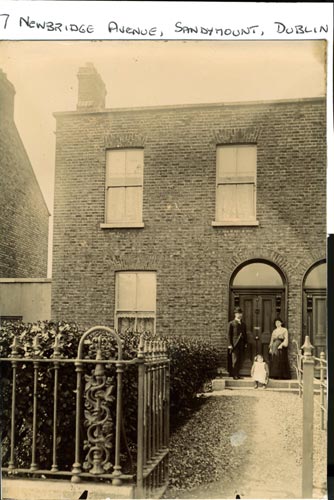
Newbridge Av circa 1890 |
7
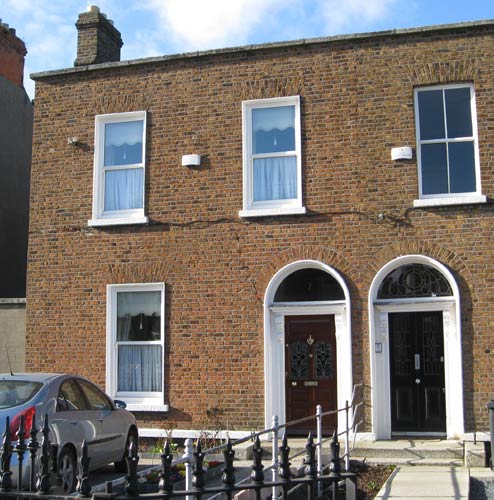
Newbridge Av in 2008 |
Our
home in early days was at

As we
grew older and could swim, a great pleasure was to row out into
In my boyhood days bicycles came into common use by both adults and young people of both sexes. My earliest memory of women riders was to see them wearing bloomers instead of skirts. This fashion only had a short run as the ridicule and jokes they brought to the wearers was to say the least embarrassing and by no means polite. Bloomers gave way to the divided skirt, and later when the back wheels were covered with netting suitable skirts came into being.
As May & I grew older, we were encouraged to bring our friends to the house, and we were encouraged to participate in outside interests.
School
started at 9.30. May and I attended schools in

As a
small boy I remember seeing Charles Stewart Parnell’s funeral in 1891 from
a friend’s house in
I also
remember Donnybrook Fair, which in olden days had provided revel for the

After sixty years I can still recall the disgusting scenes that were openly seen during the holidays. At the stalls the younger people were able to purchase what were called “treacle tillies”, an awful looking piece of pastry with a scrape of treacle. The youngsters either licked these or wandered round the Green dabbing them on their colleagues or anyone else that took their fancy. Law and Order tended to get forgotten, and the Police had a rough time in preventing things going to extremes. In due course Irishtown as the venue for excitement gradually faded away, and by 1900 it had become a thing of the past.
In 1902 the family moved to 24 Rathgar Road, Dublin, and Charles lived with his parents there till he left on joining up in 1916.
The
red uniforms of the British troops added colour to the city. The uniform was
like a magnet to the girls along
This was an occasion looked forward to by school boys, who after the programme of the day was complete, searched the grounds for blank ammunition dropped by the troops in the hope of setting off explosions of their own.

There
were no motor cars, or mechanically propelled vehicles in those days. Horses
were the only means of transport, and donkeys and even half starved ponies
were to be seen trundling round loads in two wheeled carts. Four wheeled cabs
were drawn by horse, and outside cars, on which the driver sat on what was
known as the “dickey” which was in the centre directly behind the horse. Many
of the cabs were of a filthy type drawn by worked out horses. On side cars
the passengers sat on the sides, back to back. The geniality of the horses
was on the whole good, and driving on them was really exhilarating The fares
fixed by the police were reasonable. But woe betide the passenger who failed
to give a tip. Some of the drivers were downright dishonest, and unless a
policeman was near, often charged extravagant fares, and the drivers had many
tricks. One morning on going into town by the train from
Jaunting car drivers were sometimes called "carmen" but a more common name for them was "jarvey". This word dates back to the 17th or 18th century, when jarvey was the term used for a London hackney coachman. The term's origin is obscure. One explanation links the word jarvey to St. Gervais given that the saint's symbol was a whip. The Oxford English Dictionary states that jarvey derives from a coachman named Jarvis who was hanged. By the 1880's "jarvey" had passed out of fashion and was replaced by the more familiar "cabby", but it remained popular in Ireland. Joyce uses the word over twenty times in Ulysses.
I was
then entered for a scholarship at the Merchant Taylor’s School,
In due course I decided on a Civil Service career and I was placed in the school form for aspirants to the Civil Service. Unless by impositions, or extra work, junior masters were not permitted to punish boys. I remember on one occasion being sent down to the head by a class master to report some misdemeanor that I had perpetrated. The usual course in such a case was to knock on the Heads study door. On entering the Head asked why I was there. I responded “I do not know”, rather than the expected “To report, Sir”, I got six of the best and told to go back and ascertain why I was to report. I came back and told him, whereupon I received another six of the best upon my “sit upon”, and was dismissed back to my form. This was the only occasion that I was sent down to report. My father was keen on my education, and whilst at school, each week I had to do extra work that he set me.
In the police force, apart from efficiency in police duties and law, promotions were made on the results of a Civil Service Examination. So my father had knowledge of what would be required if I were to gain a place from the competitive examinations for entrance to the Civil Service. Unless I prepared the work that he had assigned to me, I was not allowed to take part in football or cricket matches. This I regarded as serious. I had developed into a sturdy rugby player, and was on a senior team. The disgrace of being obliged to declare off a match, and the reason being known, made me keen to do the extra work for him. This extra work paid dividends. Previously I seldom got above the middle of my class in the annual examination, now I came out near the top.
I recall an incident which gave me embarrassment. A governor of the school gave a prize of £5. I managed to win the prize, although I was only in the 5th form, and against boys in the 6th form. When the results were announced, I remember the 6th form boys looking at me, as I blushed in taking the prize from them. Mr Moore was a friend of my father, and knew that I had to do extra work for my father. I purchased my first bicycle with this prize.
Mathematics was one of my father’s strong subjects. I had to do weekly problems in advanced mathematics, which I now realise were actually a bit beyond my father. In later years my mother handed to me a book that had the answers to the problems that he set me. She told me that often, after I had gone to bed, the old man used to get the book of answers out, and study the set problems so as to be able to explain them to me. This extra work proved a great help to me later on as well, as it helped make things easier for me when I went for higher examinations in later life.
The Civil Service
I think
my decision to try for the Civil Service as a career was due to my father
having so many friends in the Civil Service, holding good positions with security
and who seemed to enjoy their lives with good holidays. I was sent to a “grinder”,
Mr Sparkhall Brown, who had formerly been a master of the Civil Service form
at the
He
was certainly a conscientious teacher, and managed to get success for his
candidates. The examinations were open competition from all parts of the

For
a short time prior to my passing the required exams, I had been working as
a temporary employee at the offices of the Intermediate Education Board and
the Irish Land Commission. Now I took my new Civil Service post on
I realised that if this were to be accomplished then I would require a good knowledge of Local Government law and procedures. Professional qualifications were a necessity. I first took the matriculation examinations of the Royal University of Ireland, as matriculation was required before one could start any professional studies.
Following this I qualified as an accountant, and became an Associate and later a fellow, of the Corporation of Registered Accountants (FCRA)
 |
 |
Charles
Grant 1911 |
1911 census shows him living with his parents at 24 Rathgar Rd, Dublin. |
In 1912 I was admitted as a student of the Honourable Society of Kings Inn, and proceeded on a three year course for call to the Irish Bar. In 1914 I sat for the Honour Examinations held in October, and awarded a certificate for superior answering in the History of Law, Jurisprudence, The Law of Real Property, and The Law of Personal Property. On this result, I was spared the need for the third year of study which is normally necessary for a call to the Bar. I was immediately called before the judges of the High Court of Ireland.

My search
for qualifications over the years was, I admit, strenuous and demanded a sacrifice
of both time and pleasure. In addition to my legal studies I realised that
accountancy was important too. I attended evening classes three nights a week
at the Rathmines School of Commerce in order to acquire experience in accountancy.
From various examinations, I was awarded certificates in Advanced Bookkeeping
and Accountancy, Company Accounts of Procedure, Adjustment of Partnership
Accounts, Partner and Executor law, Rights and Duties of Liquidators and
Trustees. In December 1911 I passed the final examination as MCRA, and in
August 1912 FCRA. At that time I little thought that the acquiring of accountancy
qualifications would in later years lead to me taking up the financial side
of Local Government, when I was appointed Senior Government Auditor in the
Ministry of Home Affairs for
In the
years 1912, 1913 and 1914 I just about gave up sport while I was studying
for the Bar, and which required just about all my free time. I would get up
a
Prior
to the introduction of the electric tramcar in about 1900, tramcars drawn
by two horses were in operation and covered the journeys between
Military
In 1903,
before I had taken up studying seriously, I joined the South of Ireland Imperial
Yeomanry, in which I served for 4 years until the termination of my engagement.
The Regiment was formed after the South African War, and I trained as mounted
infantry. (On December 13, 1899, the decision to allow volunteer forces
to serve in the Second Boer War was made. Due to the string of defeats during
Black Week in December, 1899, the British government realized they were going
to need more troops than just the regular army, thus issuing a Royal Warrant
on December 24, 1899. This warrant officially created the Imperial Yeomanry.
The South of Ireland Imperial Yeomanry was formed in Jan 1902 ) Harold
Aylward, Ian Cunningham, Billy McWilliam and I were just about the first to
join. My regimental number was 46. We decided to enlist together. Each of
us was attracted to the horses, as we had from time to time done some riding.
We had to attend a certain number of parades and riding school with the 21st
Lancers at

In the Yeomanry the officers bore a rank less than they held in the army. We had army colonels as majors commanding squadrons and captains as troop commanders. The officers were wealthy men and saw to it that no expense was spared to provide the best for the troopers. I enjoyed the riding school and the riding course. The Rough Riders certainly did not spare us, we got a good deal of the rough that they handed out to their own troops. I attended five training camps on the Curragh plus one of the All Ireland Maneuvers with the army. We received five shillings a day pay whilst in training, but this money went to the regimental fund. This paid for our messing, all of which was provided by contractors. The army regularly inspected our canteen arrangements and on one occasion when food was not up to the mark, a trooper, when the usual question “Any complaints?” from the Orderly Officer, replied “This food tastes as if someone has eaten it before”. Thereupon the Orderly Officer tasted it himself and reported unfavourably. The colonel then ordered the food destined for the officers’ mess to be served to us.
On
In 1914
my old friend Major Harris, who was adjutant of the Dublin University Officers
Training Corps persuaded me to join the corps. The corps were going on an
Easter trek through
After going on this trip I could not hold out against George Harris, so joined the OTC and attended the annual training and camp at Fermoy in August 1914. My promotion was rapid, in a short time I was platoon sergeant. I got to know and make friends with a number of cadets, several of whom laid down their lives in the early days of the war. And since then many more have passed away.
The 1914-1918 Great War broke out within a few weeks after the OTC returned from camp. Needless to say it created anxiety and men flocked to the colours from all directions. A large number of cadets applied for commissions, I amongst them. However orders were issued by the government that in the case of Civil Service applicants then permission to join was required. The war necessitated the formation of new departments to meet the contingencies of a new character that arose to meet conditions arising out of the war. In this connection the Local Government Board was largely affected as many of the matters associated with the well being of the country were controlled by the Boards, who became responsible for the administration of relief schemes and the general well being of the people. My application to join the army was deferred with others, and several of us were appointed to control and administer schemes. I continued to be attached to the OTC, where I became a sergeant instructor and later Cadet Sergeant Major and Cadet Quartermaster. I won the OTC prize as the unit’s “most efficient” member in November 1915
All
this time I was unsettled and discontented. My close friends had joined up.
So I again applied for permission to join the army, which was given with a
grudge. I applied for a commission through the OTC, and was gazetted to the
Royal Dublin Fusiliers 10th Battalion, which had been newly formed.
I was sent to an officers’ school of instructors at Government House,
On his application form, dated 15November 1915, he had applied for a commission in the Garrison Battalion of the Royal Irish Rifles, but was assigned to the 10th battalion Royal Dublin Fusiliers by the army.

After
examinations I joined the 10th battalion at the Royal Barracks,

Throughout
The
Irish people seem to thrive on generations of grievances, real or imaginary
and the country had always been in a disturbed political climate, which the
Roman Catholic Church in
The
Sein Fein party had been active for many years. Rebel regiments had been drilling
all over the south of

Royal Barracks Dublin (later Collins Barracks and now part of National Museum of Ireland)
I was
serving with the 10th Royal Dublin Fusiliers, and based at the
Royal Barracks, on the day rebellion broke out at Easter 1916. (there were 467 officers and men of 10th RDF in that barracks that day) The battalion
was under orders to join the army in
(there were thirty-seven officers and four hundred and thirty men of the 10th Battalion RDF in the Royal Barracks at that time. The DMP phoned the Military HQ at |Parkgate at 12.10 to say that the Castle was under attack by armed Sinn Feiners. Col Cowan then ordered man from Royal, Richmond and Portobello Barracks to march to the relief of the Castle)

I received
orders to take B Company, about 50 men to the Castle. No further orders and
there was no inkling that rebellion had broken out. I proceeded at the head
of the party down a narrow street to the quays, where on turning a corner
into
"Easter Rebellion by Max Caulfield "has an account by Lucy Stokes, a VAD nurse on her way home. When she got to the Quays near the Royal Barracks she saw a large body of soldiers running out of the Royal Barracks and taking cover behind the opposite wall of the Quay.An advance party of soldiers ran over the bridge with fixed bayonets, under fire from rebels in Guinness Brewery. Two officers politely suggested to her that she found a safer way home along the north bank of the Liffey. She saw these men, whom she identified as 10th RDF edging their way cautiously towards Dublin Castle. Although the advance party had crossed the river, the main party continued along the north bank, with the intention of crossing via a lower bridge, and making a direct assault up Parliament Street to the gates of the Castle. However they came under fire from the rebels in Mendicity Institue under John Heuston. The rebel fire scattered the soldiers. but they were able to leave a strong party to cover, from behind the Quay Wall, the rest of the RDF as they advanced. The main party continued toward Queen Street Bridge, which they crossed under heavy fire. At 1.40 the first military relief arrived at the Ship Street entrance, 180 men in total, 130 from RDF and 50 from Royal Irish Rifles

B Company 10th RDF in 1916
The officer following me, Lt Neilan, was killed,
Lieutenant Neilan, was reported as being shot by a sniper on Ushers Quay. His younger brother Anthony was taking part in the rising. Lieutenant Gerald Aloysius Neilan, 10th Bn Royal Dublin Fusiliers. KIA at the Mendicity Institution on Usher Island, Dublin.Aged 34. Son of John Neilan, of Ballygalda, Roscommon. Buried at Glasnevin Cemetery, Co. Dublin. Official reports show two RDF officers killed that day Lt. G.A. Neilan and 2nd Lt G.R. Gray (4th Royal Dublin Fusiliers), with a further 5 RDF offers listed as wounded. At the court martial of Sean Heuston who had been later captured by the British, the 1st witness was Captain A.W. MacDermot (7th Royal Dublin Fusiliers) who stated "On 26 April I was present when the Medicity Institution was taken by assault by a party of the 10th Royal Dublin Fusiliers. Twenty-three men surrendered on that occasion. I identify the four prisoners as having been in the body of men who surrendered. They left their arms except their revolvers in the Mendicity Institute when they surrendered. Some of them still wore revolvers. One officer of the 10th Royal Dublin Fusiliers was killed and 9 men wounded by fire from this Institute on the 24th April. I searched the building when they surrendered. I found several rifles, several thousand rounds of ammunition for both revolvers and rifles. I found 6 or 7 bombs charged and with fuses in them ready for use." The 2nd witness was Lieutenant W.P. Connolly (10th Royal Dublin Fusiliers) stated "I was present when 23 men surrendered on the 26th April at the Mendicity Institute. I identified the four prisoners before the court as being amongst them. The leader was J.J. Heuston. I was present when the troops were fired on from the Mendicity Institute on the 24th April, when Lieutenant G.A. Neilan was killed and 6 men wounded to my knowledge. Heuston was without a coat when he surrendered and also had no hat on. He was not in the uniform of the Irish Volunteers. I was present when the building was searched and found arms and ammunition in it and also the documents now before the court. Among the arms there were some old German Mausers. Among the ammunition there were two cardboard boxes of "Spange" German ammunition. When cross-examined by Sean Heuston, Lieutenant Connolly was not able to say exactly where, in the building, he had found the message books.
as
were five or six men, and several more were wounded. I re-assembled the party,
leaving the injured on the road, and sent out an advance party of six men.
The party proceeded across

This is where this action took place. The Mendicity Instute is the building on the centre of this old photo.
The 10th Dubliners came along Aran Quay in the foreground then turned over the bridge.
I have now found a contemporary account from inside the Mendicity Institute on a website about Paddy Joe Stephenson who was one of the men in the Mendocity firing at the Dublins. Paddy Joe's gandson put those details together has has allowed me to quote from the book.
"Heuston came into the room. He inspected the barricading of the windows, and then told us that the Irish Republic was to be proclaimed at 12 noon at the G.P.O., and that our job was to hold the Mendicity and engage any troops that would come out of the Royal Barracks across the river in Benburb Street until such time as the 1st Battalion, under Commandant Ned Daly, had taken over the Four Courts and had established itself there.... He ordered us back to our posts at the window and said: "When the troops move out of the Barracks wait until they are right opposite to you before opening fire. A single blast on my whistle will be the signal to fire". I turned the armchair with its back to the window, knelt in it and pushed my rifle out through the window using the top of the back of the chair as a rest and waited. The trams were still running along the North Quay across the river, and crowds of people of both sexes and all ages were clustered at the corners of Ellis's Street, Blackhall Street, John Street and Queen Street. Their faces were directed towards the Mendicity, nobody moved along the quays in front of the building. They were waiting for something to happen....
..... Reflection of this kind came suddenly to an end when my eye caught signs of movement across the Liffey on the quays. Incredible to relate the Royal Dublin Fusiliers Regiment were coming out of the Royal Barracks headed by an officer carrying a drawn sword in columns of fours with their rifles at the slope. The column erupted suddenly on the quay and continued to pour its khaki bulk out like a sausage coming from a machine. No advance guard - no scouts thrown out in advance to give warning of enemy forces lying in wait. Stepping smartly in time as if on a ceremonial parade the column came nearer to us, and to add to the air of festivity a tram came running along the tracks from the Park.
The Tommies had reached halfway between Ellis's Street and Blackhall Place, when possibly the strain becoming too much, someone downstairs fired. At that reaction of the rest of us was instantaneous, and we all let go. If Sean Heuston blew his whistle its sound was lost in the thundering reverberations that beat about our ears as the echo of the rifle explosions came back across the river from the houses opposite. I fired with the rest at nothing in particular, and suddenly became aware that I was pulling on a trigger and there was no recoil. I had emptied the magazine of the Lee Enfield in a wild unaimed burst of firing quite automatically and unconsciously. I filled the magazine again, put one in the breech and bringing my eyes into focus I saw that the tram was stopped, and had emptied itself of its passengers. The khaki column had scattered. Here and there in the doorways the soldiers crouched, some could be seen taking cover behind the river wall, others were making sudden jumps for the cover of the tram. The corners still had their clumps of curious and interested civilian onlookers.
The intermittent shooting from the Mendicity now sounded as if each shot had a purpose and a target. From where I lay in the window the rear platform of the tram showed a gap of daylight between it and the roadway and clearly underneath could be seen the boots of the soldiers coming from Ellis's Street in single file into the tram. Through the gap that lay between the rounded roof of the tram and the side could be seen the movement of the Tommy as he crawled along towards the front of the tram. It was just a matter of waiting until he was at full stretch to let one go. The crawling stopped simultaneously with the sound of the shot. While he was being dragged back at the top of the tram the boots under the platform offered a too inviting target and by the time the eyes focussed again on the gap at the top another victim was waiting and got it. Then the space under the front platform presented its sandy-coloured target and you let another go. For a long while this kind of grim triangular target practice went on without a single shot being fired back from the tram as it stood there mute and immobile. Then the sound of a whistle came across the river and the sandy coloured figures withdrew into the side streets, and silence beat down on your head and drummed in your ears. In those first short sharp minutes we had been made into soldiers. The first round was to us.
A check up revealed no casualties in the small garrison of 15 men. Murnane had gone out and could not get back, so he joined Daly in the Four Courts. The only damage so far were bullet holes in the back walls of the occupied room, and the window sashes....It was now very quiet outside the Mendicity, the curious foolhardy spectators were still on the corners; there was no traffic moving and not a sign of soldiers....Some time after he had gone a squad of Tommies without rifles or equipment, but carrying picks and shovels wheeled around the corner of Blackhall Place onto the quay heading for Queen Street Bridge. We immediately opened fire on them and they retreated on the double back into Blackhall Place out of sight. One or two of them staggered as if wounded. One fell on the corner and was dragged out of sight.
The next move against us came much later but this time from Queen Street. Moving out from the Barracks, possibly by Arbour Hill and Queen Street, the British were under cover of the houses until they reached the quay, and so were able to concentrate a large force in Queen Street without the slightest chance of our having a crack at them. We got the first sign of the new moves against us with a burst of fire from a concealed machine gun from the direction of Queen Street. We were down under the cover of the window sills in a flash, and for a while lay there stunned by the appalling din as the machine gun continued to rake the front of the building without ceasing. It seemed as if some giant steel whip was lashing the stone work with a tremendous vindictiveness.
Heuston shouted to us to hold our fire, but in truth all we could do was to lie watching the back walls of the room being riddled with bullet holes, and the plaster float around the room in a fine grey mist. He crawled across the landing and beckoned to me to come out. Crawling across the floor on my hands and knees I reached the landing outside safely. We collected a paint can bomb and a candle each, and getting down again on our hands and knees crawled into the long room near Queen Street. We took up our positions, one on each side of the third and fourth windows. The thickness of the walls and the bevelled sides of the windows gave us perfect cover and a slant-wise view of the outside was easily gained by keeping close to the window edge.
The giant steel whip was still lashing away, and under cover of the intense fire the Tommies began to rush across the high back of Queen Street Bridge. Heuston struck a match, lit his candle and stuck the long piece of the fuse of the bomb into the flame. He beckoned to me and I followed suit, and there we stood with the bombs under one arm with the fuse in the candle flame waiting for the rush through the front gates which we anticipated was to come. After what seemed like eternity the machine gun stopped firing, and I could then hear Heuston saying: "Don't throw it out until they are in the courtyard".
Looking out of the window I could see the round top of the helmet of the first Tommy, who, bent down under cover of the plinth, had come from Queen Street Bridge. When he came to the front gate he jumped across the opening like a rabbit and was gone towards Watling Street. After him came the rest of the attacking force in single file. How many of these rabbits hopped across that opening I could not tell. They seemed to be innumerable, and all the time the fuses of the bombs were in the candle flame, but no sign of them taking fire. At last there were no more hopping Tommies and incredible as it seems even now, nothing happened, and quietness settled down again on the area. The expected assault had not materialised.
At this time there were just l3 of us, as McLoughlin had not had time to return. If instead of hopping across the gate they had blown it open and rushed into the courtyard we would have been overwhelmed by weight of numbers alone. Amazed at our miraculous escape, I relieved myself of the weight of the bomb and returned to my post in the next room, thinking to myself, that if the bomb would not blow up it was at least heavy enough to knock a Tommy out if you got him in the right place.
There was nothing now to do except keep a look out, and listen to the sound of shooting in the distance; picking out the sharp wasp-like crack of the Lee Enfield and the deep boom of the Howth gun from the waves of sound rolling over the city and announcing to the world that for the seventh time in three hundred years the Irish people were asserting their right to national freedom and sovereignty in arms. The Tommies appeared to have gone back to the barracks, so we examined our rifles, cleaned them and pulled them through.....
As night had fallen by this time the city was in complete darkness, for the street lamps whether gas or electricity were not lighting. As the night wore on the houses opposite and the river disappeared into a black mass. The streets were silent and so were the guns. We talked quietly in undertones in the darkness, speculating on the possible course of events...

I met Colonel Tighe of the Royal Irish Fusiliers making his way to the Royal barracks. This would appear to be Lt-Col M A Tighe of Royal Irish Regiment


He joined our party, and as senior officer took command. Passing Christchurch
Cathedral a few revolver shots were fired. We entered a street running along
the side walls of the approach to the entrance to the Lower Castle Yard. Here
we came under heavy fire from rebels in the City Hall, which resulted in a
further 20 wounded. The colonel decided that we should divide the rest of
the party. He proceeded with his group down the long steps to the
 |
 |
Dublin
Castle showing Royal Chapel |
Ship
Street Entrance to Dublin Castle |

On entering the Castle we found very few troops in occupation, and to best of my knowledge we were the only troops in control at that time. So we decided on placing sniper posts at various vantage points in order to curtail the sniping that we were receiving from houses overlooking the Castle. Sergeant Burke, who was an army schoolmaster, was killed when he and I were climbing a ladder to get up on to the roof to establish a point to deal with snipers. Burke was the finest type of man. He and I were great friends. He was a good soldier and it was sad that he should pass out in the way that he did.
25692 L/ Sergeant Frederick William Robert BURKE 10th Battalion and enlisted in Gravesend, died 28 April 1916 age 21 buried Grangegorman Military Cemetery. Connolly and his small force had scaled the iron front gates of City Hall and installed themselves in that building. Connolly had previously been employed there in the Motor Taxation Office and would have been familiar with the layout of the building. On entering, he deployed half his men on the ground floor, proceeding himself with the remainder (including his brother Matthew) to the roof circling the huge dome. Shortly afterwards a troop of British soldiers arrived at the Ship Street barracks and began to concentrate fire on City Hall. Snipers from surrounding high points began to pick off the rebels one by one and Connolly himself was reputedly shot around two o’ clock by a sniper operating from the Castle clock tower. According to some reports he slid down the roof after being shot and the Citizen Army medical officer, Dr Kathleen Lynn, tried to reach him on the parapet but was unable to do so.
The
necessity arose of providing for the protection of the Castle in case of attack
by the enemy in force. An SOS was sent out from Military Headquarters and
at about
Interestingly this is true about womens clothing. Sean Connolly's death left Kathleen Molony, a lieutenant in the ICA, as senior officer in charge of the outpost. The small force, now without their commandant, came under heavy fire from the Castle. Helena Molony and Molly O'Reilly went to the GPO to ask for reinforcements but there were none to be had. City Hall and the Evening Mail offices were assailed by heavy machine guns. Matt Connolly's memory of that night was awakening to find that, the building seemed to shudder and vibrate with explosions and machine gun fire. Glass crashed, doors and woodwork were being shattered, and somewhere in the distant part of the building a woman screamed. Helena Molony and her female comrades were the cause of some confusion to the troops. "The British officers thought these girls had been taken prisoner by the rebels." Eventually the troops realised that the women were combatants. Helena Molony and the other women were then led to a dirty barrack room on the Ship Street side of the castle and imprisoned. It appears that the British Army took the ground floor of City Hall around 9 pm on Monday night, and completed their taking of the City Hall on Tusday morning
The official information for that day was that the first objectives for the troops that day were to recover possession of the Magazine in Phoenix Park, where the rebels had set fire to a quantity of ammunition, to relieve the Castle, and to strengthen the guards on Vice-Regal Lodge and other points of importance. The Magazine was quickly re-occupied, but the troops moving on the Castle were held up by the rebels who had occupied surrounding houses, and had barricaded the streets with carts and other material. Between 1.40 p.m. and 2.0 p.m., 50 men of 3rd Royal Irish Rifles, and 130 men of the 10th Royal Dublin Fusiliers reached the Castle by the Ship Street entrance. At 4.45 p.m. the first train from the Curragh arrived at Kingsbridge station, and by 5.20 p.m. the whole Cavalry Column, 1,600 strong, under the command of Colonel Portal, had arrived, one train being sent on from Kingsbridge to North Wall by the loop line to reinforce the guard over the docks.
The prisoners were taken to Arbor Hill Prison, and many others, particularly leaders, were escorted to the Castle to be examined by experts. The Rebels had taken possession of the General Post Office and the Telephone Exchange, so that communications were cut off. At Stephens Green the Rebels had taken possession of the buildings of the Royal College of Surgeons, behind which there was Jacobs Biscuit Factory and other buildings which they had fortified, and from which they covered the neighbourhood with continuous rifle fire. Woe betides anyone wearing uniform or any policeman who came within the line of fire, or wandered into the area.
During the Easter Rising of 1916, a group of insurgents made up mainly of members of the Irish Citizen Army, under the command of Commandant Michael Mallin and his second-in-command Constance Markievicz, established a position in St. Stephen's Green. They confiscated motor vehicles to establish road blocks on the streets that surround the park, and dug defensive positions in the park itself. This approach differed from that of taking up positions in buildings, adopted elsewhere in the city. It proved to have been unwise when elements of the British Army took up positions in the Shelbourne Hotel, at the North East corner of St. Stephen's Green, overlooking the park, from which they could shoot down into the entrenchments. Finding themselves in a weak position, the Volunteers withdrew to the Royal College of Surgeons on the west side of the Green.
At around

Shelbourne Hotel, Dublin
At about
It was
a doubtful advantage to me to know
A number of online references are made to a Captain Carl Elliotson of the Curragh Mobile Column being in charge of the machine guns at the Shelbourne Hotel , but I cannot verify that
The
Green was occupied by many Rebels, there were women there, but no exception
was made as women had already been found using rifles and taking part in the
rebellion. Camp fires and trenches were in the Green. At about 5.30 the signal
to fire was given. It was a cheerful but sad sight to see the campers scattering
and running out of the far side of the Green. The
During
the rebellion, I found many opportunities of nosing into places in
Leading rebels were examined, and in due course transferred to various prisons to await trial. Many were sentenced to death by Courts Martial. On the cessation of the fighting in the city, after about 6 days, I was posted to the Court Martial Court, which was held in Richmond Barracks. My job was censor to prisoners’ correspondence, which in parts proved interesting and amusing. Some of it contained reference to extramarital family affairs, and affairs of the heart. I saw in the course of my duties all the leaders of the rebellion. During the rebellion I kept a notebook in which I entered interesting instances connected with the rebellion. I thoughtlessly left it on my table, and it disappeared, and although I made enquires, it could not be found.
A diary entry by 2nd Lt Robert Barton confirms this ". Some days later, he [Colonel Esmonde in the Royal Barracks] received an instruction from the Provost- Marshal in Dublin Castle to send two officers to Richmond Barracks to report to the officer in charge there for duty in connection with the prisoners in Richmond Barracks. I reported to Colonel Frazer. Another officer was sent with me, Lieutenant Grant. He took charge of the post office, that is, of letters coming for the prisoners, and acted as censor and distributor. Colonel Frazer instructed me to take over the duties of officer in charge of prisoners' effects. He made some statement to the effect that the War Office was greatly concerned because the troops in Dublin had been looting, an offence for which they would be shot if they were in France, and that the War Office wanted this situation cleared up."
One
afternoon the Chief Officer of the Court Martial summoned me to his room.
On entering it, he said we had met before, but at first we could not work
out where it might have been. It suddenly occurred to me that I had met him
before the war in
After
about three weeks at the Richmond Barracks I was relieved to my battalion
at the Royal Barracks. It was preparing to go overseas. At the end of July
1916 we received orders to embark for
I had
become engaged to Ethel in the previous September and we had the pleasure
of meeting during my time at the Royal Barracks. In August 1916, we marched
out of the Barracks and embarked on the steamer for Holyhead. We had a great send off. The city was
lined with people. It was sad to see the relatives of many of the men following
the troops, and the sad thought arose that few would see them again: and such
was the case that many of my comrades laid down their lives in
We arrived at Holyhead where we boarded a special train. We travelled through the night and arrived next morning at Woking, where we detrained and marched the two miles to Pirbiright Camp..
The war diary of 10th Royal Dublin Fusiliers (W0 95/3118) states that the battalion was initially `2nd Reserve Bn' RDF, but became the 10th Bn on 11 February 1916, while it was in Dublin. It crossed to England on 6 August, completed its mobilisation at Pirbright and went to France on 18 August, joining 63rd (Royal Naval) Division. The assignment of the 10th Dubs to a Naval Division and not the 16th (Irish) Division caused much concern amongst members of the Irish Nationalist Party. According to Redmond, the 10th Dubs was, ‘One of the finest battalions ever raised in Ireland.’ The possible cause for this assignment of the 10th Dubs to a Naval Division must be analysed against the background of the unfounded mistrust the British High Command had of Irish regiments following the Easter Rebellion. This mistrust of Irish regiments had no foundation. No Irish regiment ever mutinied during the Great War.
10th RDF became part of 190th Brigade, 63rd (Royal Naval) Division. On 3 October they arrived at Acheux. To Lealvilliers (4 Oct), Hedauville (7 Oct), Mailly-Maillet Wood (8 Oct), front line Redan sector (11 Oct), Lealvilliers (17 Oct), Puchevillers (19 Oct), Hedauville (21 Oct), bivouaced near Englebelmer (30 Oct), billeted in Englebelmer (31 Oct), front line Hamel left sub section (3 Nov), Varennes (7 Nov), Puchevillers (9 Nov), Hedauville (11 Nov), Moved forward to Englebelmer to assembly positions in Robert's Trench (12 Nov). Attack on Beaucourt (13 Nov). Strong points cleared (14 Nov) - assisted in rounding up over 400 prisoners. Casualties 242. To camp on Englebelmer-Martinsart Road (16 Nov). Clearing battlefield Gordon Trench (17 Nov). Via Englebelmer by buses to Authieule (18 Nov).
The Battle of the Somme finally came to an end in November 1916. During the final attack on the 13th, the 10th Royal Dublin Fusiliers helped to capture Beaumont Hamel, one of the objectives for the first day. They had 50% casualties.
Whilst
at Pirbright, Elsie and my sister May came over for a few days to see me.
The regiment then went overseas. We crossed to
(War diary for Sept 1916 and Oct 1916 for Dubliners. Having been relieved on 11 Sep, 10th Dubliners were billeted at Maisnil, then marched to Dieval on 20th Sept, and on to Ostreville on 23rd Sept. They train there till 3rd Oct. Then by train to Lealvillers. On to Mailly Maillet Wood East where they train till 11th Oct. They then relieve the Bedfords in the line - they appear to be in trenches "egg", "buster" and "freddie south" "chatham", "fox", and opposite Redan Crater. They are relieved on 17th Oct. On withdrawing from the line, they are billeted at Lealvillers, then Puchevillers, then Hedaville till 30th Oct. They move then to Englebelmer, until they relieve 4th Bedfords in the Hamel section on 3rd November. They are in the line until 7th November. They return to the line on 12th November for the big attack )
Whilst
in the line, every night patrols, under the command of one or two officers,
were sent out to get information concerning the state or changes in the enemy
lines. It was necessary that activity by the enemy should be reported and
information obtained as to whether its forces were being strengthened with
a view to attack. At times we managed to get through the wires in front of
their lines and to take prisoners. During such raids hand to hand conflict
could ensue in the German trenches, while we were taking prisoners. We would
then take the prisoners across to our own lines, were they would be subject
to close interrogation with a view to getting intelligence. They would then
be taken back for internment in prisoners lines in the rear. Casualties ensued
and many good companions failed to return. One of these unfortunately was
Tom Boyd, a close friend of our family who was captured and taken back by
the Germans to work in a Salt Mine. I was in command of the party at the time,
and had to leave behind some seven men including Tom, some were killed fighting,
some including Tom were captured. It was my painful duty to inform his mother,
who I knew well in
The Battle of the Ancre was the final part of the 1916 Battle of the Somme. Launched on 13 November 1916 by the British Fifth Army of Lieutenant General Hubert Gough, the objective of the battle was as much political as military. The Allied commanders were due to meet at Chantilly on 15 November and the British commander-in-chief, General Sir Douglas Haig, wanted to be able to report favourable progress to his French counterparts. Gough planned an attack on either side of the Ancre River, a small tributary of the Somme River which flowed through the northern sector of the battlefield. South of the Ancre was the village of Thiepval, which had been recently captured by the British during the Battle of Thiepval Ridge, and St Pierre Divion, which was still in German hands. North of the Ancre were the villages of Beaumont Hamel and Beaucourt sur Ancre; this sector has not seen major operations since the opening of the Somme offensive on 1 July.
By November the British had learnt many lessons about planning, preparing and executing an attack in trench warfare. Supported by tanks, artillery and a machine gun barrage, the 51st (Highland) Division captured Beaumont Hamel while on their left, the British 2nd Division advanced along Redan Ridge. On the right, attacking across the low ground between Beaumont Hamel and the river, was the 63rd (Royal Naval) Division which reached Beaucourt and the first day and secured the village on 14 November.
The opening attack: 13th November 1916. Immediately north of the River Ancre the 63rd (Naval) Division attacked with 190 Brigade deployed on its left. 190 Brigade included 10th Battalion Royal Dublin Fusiliers. 1 Royal Marines were the first wave, 2 Royal Marines the second wave and 10 Royal Dublin were the third wave as the reserve battalion.
The system of attack was for the first wave to take the German front line and to remain and consolidate it whilst the Battalions in the second line moved on to the preliminary objective in a leap-frogging motion. The change of leading troops would continue until all three objectives (green, yellow and red) had been achieved.
On the 13th of November 1916, the 10th Dubs had a battalion strength of 24 officers and 469 other ranks. On the 12th of November, X Day as it is recorded in the battalion diary, the battalion assembled outside the village of Engelbelmer which is approx two miles west of Hamel. They spent the night in the open. The next day they attacked the Germans facing them in the Hamel section. They started from Gordon and Roberts trenches.
At 05:45 hours under the cover of the artillery barrage the leading battalions made good progress but at the cost of severe casualties from enfilading fire. The assault commenced over a depressing and dripping battlefield that was shrouded in fog. This effectively covered the movement of the troops who burst upon the surprised Germans. In a driving snow storm which turned to sleet and then rain, the 10th Royal Dublin Fusiliers supported by two tanks which stuck in the chalky mud, moved forward.
190th Brigade was then ordered to press forward, to occupy the trenches vacated by the Royal Marines, and the intermingling of units on the hillside occurred. In the190th most battalions had become intermixed with other units. At zero plus 46 minute they moved across in four waves, and kept direction well in the fog. They reached the Sunken Road with few casualties. The early advance of 10/RDF was between the Green and Yellow Lines working up towards the Beaucourt-Beaumont Road. The 10/RDF ran into a very strong German redoubt and took a lot of casualties from it and also from their left where 51 Div had not kept up momentum and opened RDF to enfilading fire from German machine guns. Men took shelter in the shell holes along with the dead and wounded of the Royal Marines.
The British front line was where you will find the Ancre Cemetery today. Almost immediately between here and the Station the Germans had their first trench system - a maze of front line and communication trenches wrecked by shell fire. From the railway station there is a road which runs up the ridge from the café towards Beaumont. Just above this is a ridge running behind the road which formed the Germans' 3rd line of defence and the Division's first objective on what was annotated on maps as the Green Line.
The Commanding Officer, Lt Col E J St G Smith tried to get his Battalion headquarters forward from Buckingham Palace Road into the German trenches. He got through a gap in the front line with his headquarters staff, but he lost his adjutant Lieutenant Bailey (the adjutant must have been wounded, rather than killed, as he was the best man at my grandfather's wedding a few months later in Dublin). The attack was able to reorganise and push on to the second line. It was now 9am. However the advance could not make progress against the German third line. By dusk the third line had not been breached and the remnants of the six British battalions lay decimated in front of the German wire.
The top of the ridge at the Beaucourt Trench formed the second objective or Yellow Line. From, here the Division was to press on to the Red Line and its final objectives which were the village of Beaucourt itself and the Muck Trench behind it. The entire attack would be uphill and within the field of fire from machine guns from both flanks - one of the major reasons for the 36th's inability to advance on the 1 July across exactly the same terrain. However unlike the hot summer’s day on which the opening attack had taken place on 1 July, the ground in November 1916 was a quagmire of mud.
Bringing forward the support battalions made little difference, although about 400 men of the Hood and Drake had dug in short of Beaucourt. Throughout the day, bombing attacks were made against a strongpoint on Beaumont Hamel Spur but by nightfall, the furthest advance was into the German support line. 63rd Div renewed it’s attack on Beaucourt Trench at 6.20am.on 14th Nov.190 Brigade troops were assembled at Beaucourt Station with a hodgepodge of men from the previous day. They pushed into the village and formed a line around the eastern edge of the village. The earlier attack resumed in conjunction with this advance and occupied Beaucourt Trench.
Two tanks were then sent from Auchonvillers to support the attack on the Strongpoint in Beaucourt Trench, still held by the Germans. The two tanks broke down but the second was in range of the strongpoint which it bombarded with it’s 6-pounder gun. The Dublin Fusiliers took 400 German prisoners when the strongpoint surrendered. By 10:30 hours Freyberg could report that he was in control of Beaucourt. They suffered 51% losses, i.e. 242 men killed or wounded or missing. The statistics read as follows. Officers killed in action, six; Officers wounded, nine. (2nd Lieut. Boyd suffered shell shock but remained at duty). Other ranks killed in action, thirty two; Died of wounds, three; Wounded 132. Shell shock, three; Missing, 57.
On the night of the 17th November it started to snow and the final assaults of the battle of the Somme were launched the following morning. The Official History records... “the assault was delivered in whirling sleet which afterwards changed to rain. More abominable conditions for active warfare are hardly to be imagined...”
At this point, the battle of the Ancre could be considered a success for the British and Haig was satisfied with the result however Gough was, as ever, keen to continue further, a characteristic of his command that was loathed by the men who had to serve under him. On 18 November, II Corps was expected to drive north towards the village of Grandcourt and the river. North of the river, V Corps was meant to secure the remainder of Redan Ridge. Neither attack was successful. When Gough called off the battle of the Ancre, the battle of the Somme had effectively ceased. Both sides now settled down to endure winter on the Somme in which the weather was a common enemy.
In the

We took
over the former German line, and around
His official record says that he was wounded on 13th November 1916, and was suffering from "neurasthenia". It states that "he was buried in a shell hole, but was contributed to by being under shell fire in the course of his duties as bombing officer and also by septis resulting from injuries received from barbed wire in September or Oct 1916 at Mailly-Maillet" (probably 8th Oct 1916). 5 officers and 76 men from 10th Royal Dublin Fusiliers were killed in action on that date.
Soldiers who were diagnosed with 'shell shock', 'neurasthenia', and 'war neurosis' in the hospitals and casualty stations on or near the battlefields, were sent back Britain for treatment. The War Office used the term 'shell shock' to describe soldiers who were so traumatised that they were unable to carry out their duties on the battlefield. Early in the war, these soldiers were accused of being 'cowards' or 'deserters' and were shot, and by 1918 the War Office had eradicated the term from its documents. It was not just a British phenomenon - German doctors called the symptoms of their soldiers kriegsneurose and the French described the illness as la confusion mentale de la guerre. The experience of shell-shock was a major influence on the development of psychiatry and psychology. It forced the realisation that otherwise normal people would break down under sufficient stress.
Neurasthenia' was a term used by an American neurologist called Charles Beard in 1869. He described Shell Exploding patients as neurasthenic when they were depressed and inert. The term 'shell shock' was first used by Charles Samuel Meyers, a Cambridge psychologist, in an article he wrote about the cases he had been treating. Shell shock was literally the shock felt by a soldier near to an exploding shell and the feelings of having one's senses assaulted by the detonation flash, heat, displacement of the air and the ground tremors as the shell formed a crater in the earth. Meyers argued that soldiers suffering from 'mental shock' fell into one of three categories: hysteria, neurasthenia or mental disorder. Meyers also pointed out that soldiers did not actually have to be in proximity to an exploding shell in order to succumb to 'shell shock'. Soldiers acquired shell shock through constant exposure to war.
Official British figures claim that 80 000 cases of shell shock passed through the various medical facilities during WW1 but many cases were covered up by sending psychiatric cases to ordinary hospitals and the true figure could be around 200 000 cases. Until the end of 1916, the majority of shell shock cases were sent to England for treatment, then special centres were created in France to treat these patients and only the very worst cases were sent back to Britain. It was estimated that, by December 1914, 7-10% of all officers and 3-4% of other ranks in the British Expeditionary Force were 'nervous and mental shock' casualties. There was an epidemic rise from July to December 1916, during the Battle of the Somme, when 16 000 cases were recorded in the British army alone.
Probably 60-80% of shell-shock patients displayed 'acute neurasthenia', subsequently termed acute war neurosis, about 10% had conversion symptoms such as mutism, fugue, paraplegia, and abasia astasia, and 5% were considered to have concussive brain injuries. The epidemic of acute psychiatric casualties, which nearly paralysed the British Army after the Battle of the Somme in July 1916, forced upon the medical establishment the desperate need for prevention and rapid treatment. The British Army could not cope with this 'human wastage'. In the year to April 1916, 24 000 of these casualties had been sent back to Great Britain. Some 40% of casualties in the Battle of the Somme were shell shocked, adding enormously to the loss of manpower.
The British Government had another reason for alarm—the huge impending pension bill entailed by those who did not recover. It favoured a psychological model that blamed the individual rather than the external factors, and by mid-1916 the Army viewed shell shock as a contagious psychological response of the 'weak' to protracted fighting. After a few hours, days or weeks, symptoms usually resolved spontaneously with rest and time, and irrespective of physical and psychological therapies, provided that the symptoms had not been behaviourally reinforced.
The
next part of the chronology is his wedding on 15th January which
was fitted in to a 7 day leave in
I then
came home on 7 days leave, but while passing through
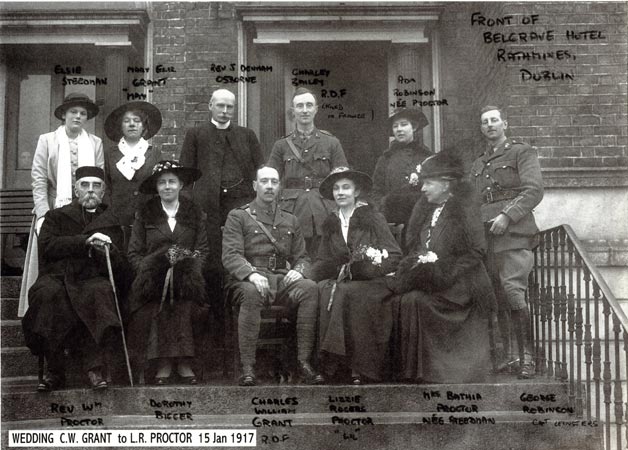
After
our wedding on

My regiment
was by then on a march back to the lines, and I was ordered to take over command
of B Company. We rejoined the 63rd Division on the
Miraumont was a little reported battle that was extremely costly in casualties. The Battle of the Somme effectively continued into the New Year of 1917 as the generals required that the line advance around Miraumont. The rested Royal Naval Division suffered severely in this attack. Ironically the Germans ceded much land around here a few weeks later without a fight in their March withdrawal. The RND moved into the line around Grandcourt at the end January 1917 , and prepared for an offensive action towards Miraumont.
 |
 |
I was
some weeks in hospital in


A photo of other patients at Croxteth Hall from Simon Heyes whose uncle Strang Graham is sitting on the left. I believe that there were only about a dozen officers there at any one time
Whilst I was at Croxteth Hall Elsie was staying with an old
family friend, Miss Gerrard, at
On arrival
at
Lady
Desart called to see Elsie almost every day and often had her to her own home.
There we met charming county people who entertained us and took us out to
many places in the area. I was again fortunate in this hospital in knowing
the Matron, Mrs Lumley. I knew her before the war, and she had recently married
a TCD friend of mine, who was now in


My fellow
officers were really good types, and the best spirit operated between us.
There was one charming officer of my regiment there who had several leg wounds
and who was the only one of us who had been found breaking rules. He came
from horsy stock in


I was
at Kilkenny for around 3 months, and then moved to the

His letter confirms his dates in hospital as 28 Jan 1917 to 13 October 1917. Then sick leave till 11 Mar 1918. The dates and places in his diary are difficult to follow. The hospitals mentioned are Hospital for Officers, Croxteth Hall, Liverpool: .Sir William Wheeler’s Hospital for Officers at Fitzwilliam Square in Dublin.: Lady Desart’s Hospital, Talbot Inch, Kilkenny (for 6 weeks), Castle Hospital in Dublin :Monkstown House Auxilary Hospital (discharged 13 Oct 1917). I had a message from a researcher in Scotland suggesting he may have also been at Lennel House, a convalescent home at Coldstream in the Scottish Borders.
I joined
Elsie at her parents home at

Charles and Elsie Grant with Alan
We rented
a flat, 18 Earlsfort Terrace, from Mrs Allingham. It was a beautifully furnished
home, and we were comfortable and happy there. Alan was born at a nursing
home on
 |
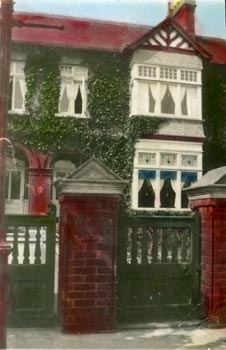 |
18
Earlsfort Terrace, Dublin in 2008 |
12
Galtrim Rd, Bray |
At this
point we were offered the use of
"This is a well preserved Edwardian house, which forms part of one of Bray's most complete and most attractive terraces. Terraced two-bay two-storey house, built in 1907 as part of a uniform row of thirteen properties. To the front elevation there is a full-height square bay topped with a gable. The façade is finished in brick to the ground floor level, unpainted roughcast to the upper level, and mock timber framing to the bay. The tiled pitched roof has a slight overhang with exposed rafter ends and plain bargeboards, decorative ridge tiles and a shared brick chimneystack with corbelling. The entrance consists of a semi-circular headed opening with moulded archivolt, which fronts a recessed porch, within which is a part glazed timber door screen. The windows are flat-headed and have mullioned and transomed timber frames, with casement and top-hung openings. The upper lights of the frames are filled with small panes, some leaded. Cast-iron rainwater goods. The building has a street frontage, but is separated from the street by a garden which is enclosed by a rendered and brick wall, and a decorative wrought-iron gate which has square brick piers with cement-rendered, pediment-like caps."
On
my demobilisation I also resumed my position with the Local Government Board.
After demobilisation in 1918 I entered Trinity College Dublin, where I attended
lectures incidental to the Art and Law degree of the university, and in 1920
I completed the course of study required, and the degrees of B. A. and LL.
B. were conferred on me in October 1920. In
 |
 |
Custom
House, Dublin in 2008 |
|
Burning of the Custom House, May 1921
On
On leaving the Custom House via a side door onto the Quays I found Mr Ernest Leach
Assistant
Secretary to the LGB and Mr Frank McCauly LG Inspector identifying a party
of officials to military and other Government officials. I was told to get
away as quickly as I could. I proceeded to move away when I was told that
it would not be safe to go through the watching crowd of spectators. An ambulance
was standing by, and I was instructed that the driver would take me out of
the area. I thought that TCD would be a good quiet pace to be dropped off
at, and the ambulance took me there via the Lincoln Place Gate. We entered
the grounds of TCD and seeing that there was nobody around, I stopped the
ambulance and slipped out. I made for Westland Row Railway Station where I
took a train to Bray and from thence to my home at
His memory is a little out here. On Sunday 21st November 1920 Sgt. John J. Fitzgerald, born 15 March 1898 at Cappagh, age 22, of the Royal Irish Constabulary, alias "Captain Fitzgerald" or "Fitzpatrick," whose father was a doctor from Co. Tipperary, was shot and killed at 28 Earlsfort Terrace while recovering from an arm injury. He had survived a previous assassination attempt when the bullet only grazed his head. This time he was shot twice in the head. He was the son of a Tipperary man. At this address, according to the assassins report, the documentation found detailed the movements of senior IRA members, proving that the British Secret Service was planning an operation similar to the IRA's of that morning. On the morning of Sunday 21 November 1920, the IRA carried out one of its most successful counter intelligence operations. The British Cairo Gang (so-called probably because they used the Cairo Cafe near TCD for meetings) had been established because of Sir Henry Wilson’s demand that the IRA’s Intelligence Department be eliminated. Living unobtrusively in boarding houses in Dublin, the British agents prepared a hit list of known republicans for assassination. But the IRA’s intelligence network was a step ahead. Frank Thornton obtained the names and addresses of all the senior British secret service men sent over to Dublin. An IRA agent in the DMP stationed at Donnybrook, Sergeant Mannix, was the source. The operation had been carefully planned by many of the IRA’s most senior activists, including Michael Collins. They may have got the wrong man with Fitzgerald.
The
following day I went into
In 1920 the Government of Ireland Act was passed with the object of appeasing the rival political parties in Ireland by setting up the constitution of the Northern Ireland Government, a factor which caused such anxiety to Civil Servants who had been appointed by the Imperial Government They were given the option of electing to serve in the Northern Ireland Government or to take a pension from the Imperial Government, which their service entitled them to.
My decision as to what to do next was made easy when I was offered the Principalship of the Local Government Division of the Ministry of Home Affairs in Northern Ireland, which I accepted and took up my duty in August 1921.
In
In 1923
I answered an advertisement in the London Times inviting applications for
the appointment as Town Clerk in
On
 |
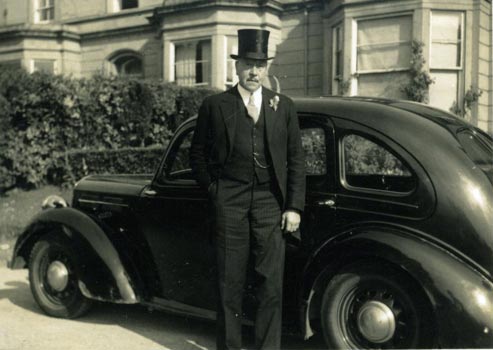 |
| Charles, Elsie and Alan circa 1925 | Charles Grant outside Ardmore, in Holywood, in 1936 |
I continued in the position of Principal of the Local Government Division until 1927,
 |
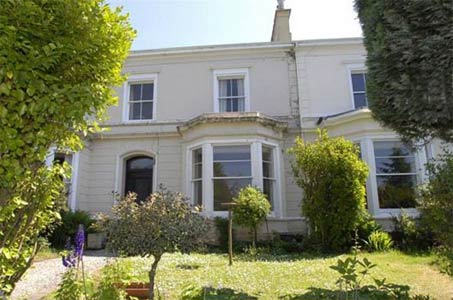 |
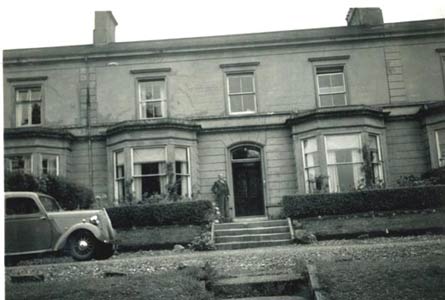
Ardmore,
Holywood |
Ardmore
Terrace 2007 |
when
on the death of my old friend George Bryan, I became Inspector of Local Government
Audits and Chief Local Government Auditor. My duties involved the supervision
of the other Local Government Auditors who had been assigned to audit various
local authorities in
In the autumn of 1938 arrangements were being made for the protection of the population in the event of war. I accepted the position of Chief Air Raid Warden for Holywood. It was necessary to recruit the various services – wardens, Red Cross, salvage, demolition. We had to educate the population as to what to do in the event of air raids. Shelters were erected throughout the area, and measures introduced for the protection of home and people. On the outbreak of was the district was patrolled nightly by wardens. All lights were forbidden, with not even a chink allowed from any house. The Royal Ulster Constabulary assisted the wardens in seeing that this was carried out, and it was not popular when police prosecuted householders who failed.
 |
 |
In addition
there was a special appointment to myself of the audits of the accounts of
the Belfast Corporation, of the
In 1946 I accepted, after much persuasion from David Keir, the Vice Chancellor, the task of raising £250,000 for the Queens University Centenary Fund. After a long palaver I agreed to do so, and had the assistance of an office and staff. I raised the required amount, and I was quietly relieved to get the job done in good time. I received many compliments on its success.
From
1946 to 1947 I held the position of Treasurer of Mixed Union Clubs at Bryson
House, until I accepted an invitation from the
In 1952, on the invitation of the NI Hospitals Authority, I became a member of the Committee of Management of Forster Green Hospital, and served on that until 1960, when again I had to retire because of the age limit. At a luncheon on my retirement, they presented me with a framed formal document appointing me a Honorary Governor of the hospital.
Recreation
Music
Both my sister May and myself received music lessons, to which May fully responded and became a fair pianist, able to read music. I fear in that respect I failed to develop. As regards the piano, my pleasure was in playing from ear, and I developed in the direction of strumming popular arias and vamping songs of the day. Our music teacher was strongly opposed to my attitude and discouraged me with the result that in time I lost the art. To my mind this was a mistake, and in after life I regretted giving up the piano. The proper desire of the teacher to train me, and her abhorrence of playing by ear discouraged me. I did not want to become a perfect theoretical musician, and I feel that her attitude deprived me of what would have been a pleasure to me in later life.
I have been told that I have a passable singing voice, which was often called for when something light was required, and in particular songs of the day, which I had the knack of quickly picking up, which appealed to gatherings of club members and non high brows. From an early age and up to the 1914-1918 War, May and I were members of the Parish Church Choir. May had a nice soprano voice. There was a surplice choir and I enjoyed participating in the service. On several occasions as a boy I took part in soprano solos, and on Christmas Day when the man who was to take the solos in the Carols was unable to turn up, the organist called at my home before breakfast and persuaded me to take his part. So for an hour before the service he rehearsed the solos with me. At the service I understand that I did not disgrace either him or myself. At the time I had a high baritone voice, alas it passed away in later years.
Sports
During my years of studying prior to World War I I played hockey, tennis and football and in addition did some rowing.

I played
for several years on Monkstown Football club 1st XV, a senior team.
I had the pleasure several times of playing against varsity teams from
I rowed for two years in 1906 and 1907 with the Dolphin Rowing Club. Our crew in 1907 won the Visitors Cup at the Metropolitan Regatta, and I still have the gold medal our eight won there. I did not have the time for full training, but enjoyed the rowing with crews and doing some sculling on the Liffey.
Im summer
I played tennis at the Grosvenor Tennis club in
My Grandfather Stephen Grant
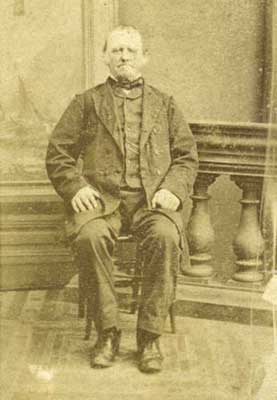
Stephen Grant, born 1811, Charles' Grandfather
My father
Thomas Grant was born on
My grandmother
Mary Ann (nee Piper) was born on
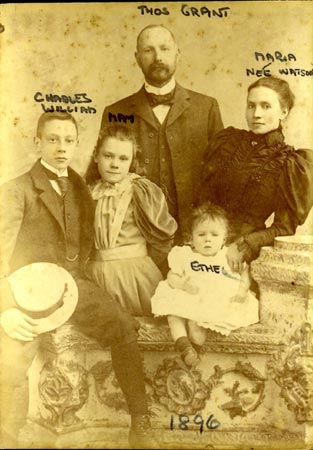
My father Thomas Grant and mother Maria Grant
My father joined the Dublin Metropolitan Police at the age of 20, in the year 1871, and after a period of instruction and training, he was assigned to B Division, which covered a large portion of the city south of the Liffey. A large number of residences of wealthy people were to be found within its area. These were the lovely squares with the old Georgian houses, the principal banks, business houses and financial interests, Dublin Castle, in fact the wealth of the city. Then there was the contrast of the lower slums and tenement houses where lived the very poor in the most awful poverty and dirt. Here were to be found the haunts of criminals, and in some areas it was a danger for respectable citizens or even guardians of the law to appear unless protected.

Charles and Thomas Grant in 1923
It was
also an age of political strife in which the most diabolical crimes were concocted
and carried out all over
In the
course of duty he obtained several favourable records for the performance
of duty. There was to be found the scum of Dublin, and the rough and tumble
that the police experienced through the streets and byways from the bad element
which occupied the tenements, was I have been told, such as to require courage
and a stout heart on the part of the police. The area included the shipping
portion of
This
was a period of political unrest, arising out of land agitation which erupted
all over
In the
police force all promotions were made from the ranks, and as a result of good
service and on the success of examinations, my father at an early stage realised
that if he were to expect promotion, it would be necessary for him to study
as much as he could during his leisure hours. A practice which he kept up
until he reached the rank of Superintendent, and which in due course was reflected
in ensuring that his children should receive the best of education. In a few
years my father was promoted to Sergeant, and in due course passed through
the ranks of Station Sergeant D Division, Inspector of B and E Divisions.
He was Inspector at Headquarters Dublin castle for some time, until he reached
the rank of Superintendent in
I must
mention the dear friend of the family, Miss May Fry (daughter of William Fry,
solicitor) to whom our family is much indebted for much kindness and sympathy
in our early days. Just before my father joined the force, Miss Fry had taken
up her work within the police, and met my father whist he was a recruit at
the training depot. She had formed the Christian Association for the Police,
and my father was one of the first members. My father met her soon after he
joined the police. She was interested in Christian work with the Dublin Metropolitan
Police and their families. When a young recruit joined the force she sought
him out and extended to him friendship and opportunities of finding recreation
and spending his leisure time in good surroundings. At
Her
great friend, Miss Sanders, did similar work amongst soldiers, and was the
founder of the Sanders Homes which in time were to be found at the Curragh
Military Camp, and indeed in places all over
My father
Thomas Grant married Maria Watson, the second daughter of William Watson and
Elizabeth Blong (of Huguenot extraction), at

St Paul's Portarlington is one of Ireland's most historic churches and celebrated its 300th anniversary in 1996. The tercentenary of "The French Church" which was consecrated in 1696, was marked with a series of special events. "The French Church" was built to serve the Huguenots - French Protestants who had fled persecution in their native land and who fought on the side of William of Orange in his defeat of the Jacobites. The Huguenots brought with them their hallmarks of industry, architectural style and culture. So strong was their influence that for about 150 years records at the French Church were written in French rather than English or Irish! These fascinating books have been preserved to this day in the church and the information they contain is much sought after by scholars world-wide.
As a small boy I can recall seeing him frequently studying with his head in text books, studying history, geography and mathematics as well as law, whilst preparing for the Civil Service examinations necessary for promotion. Apart from this, he was a keen gardener, and useful with his hands in making improvements in the home. He seldom spoke of his experiences in his early days, but from many of his friends I have heard from time to time expressions of his efficiency and courage in many difficult positions.
He was
Inspector at Headquarters Dublin castle for some time. Under the old regime,
the Lord Lieutenant ruled from
The
Throne Room was in white and gold and said to compare favourably with the
one in
During
his service he was associated with many important cases and leading government
and citizens of the city. He had responsibilities in connection with visits
of royalty and others for whom special police arrangements were necessary.
On the occasion of the visit to
In 1903
a public meeting of prominent people from various parts of
The
exhibition was opened on
Every
day vast crowds of visitors attended the Exhibition. Excursions from all parts
of
The
occasion of the visit of King Edward VII on
My father,
under the authority of Lieutenant Colonel Sir John Ross of Bladensburg, was
responsible for the police arrangements for the entire period of the Exhibition.
To quote from the report of the Exhibition Committee of
“The actual administration and supervision of the arrangements lay with Superintendent Thomas Grant, chief of E Division within whose district the Exhibition stood. Mr Grant with the inspectors, sergeants and constables under his command, by their tact and vigilance largely helped to make Herbert Park the delightful place of recreation it proved to be to the hundreds of thousands who came between May and November. It will be readily understood that the duties imposed on the Superintendent, his officers and men, were constantly highly responsible”
During the six months the police closely controlled the movement of the crowds both with men in uniform and in plain clothes all over the grounds. They gave suspicious characters, pickpockets and other undesirables little scope to pursue their objectives. The evening of the close of the Exhibition was the only time that real trouble was experienced. After the elderly, staid visitors started leaving for home, an organised attempt was made by juvenile members of the crowd to express their feelings in a more vociferous and less restrained manner, by participating in rough and tumble play through the grounds, and causing extensive damage. At the first appearance of hooliganism the police went into action and after some effort, the grounds were cleared, without much damage. The press reported that because the good humour in which the matter was handled by the police only a few arrests were made.
He was
always popular with the students of TCD, who in periods of excitement, he
handled humorously when they interfered with traffic in the city and upset
the usual course of law and order. Apparently the manner in which he handled
them at the close of the exhibition was appreciated. On Christmas Eve 1907
a parcel was handed in at
My father retired from the police and went on a pension in 1912. From many directions people expressed their regard for him and the services which he had rendered to the community over a long period. He was summoned one afternoon to Countess Aberdeen at Vice Regal Lodge, where he had tea with her and Lord Aberdeen, Viceroy. After tea she presented him with a gold breastpin, which she pinned on his tie. He was the recipient of several acknowledgements from business and personal friends. He was also, on retirement, entertained to a dinner by the men of his division, who presented him with an illuminated address (I have this in 2007), a salver and a tea service. In his reply speech of thanks, one of the things he said was that he intended to live a long time in his retirement in order to draw a pension as from the good old British Government for very many years.
For
some years before his retirement my mother had been in delicate health, and
on retirement he devoted himself to looking after her and Ethel. My mother
passed away on
My father
died on
Marriage to Lizzie Proctor
I married
Lizzie (or Elsie as she was known) Proctor, daughter of the Rev William Proctor
and his wife Bathia Proctor of
It happened
that Charley Bailey was home on sick leave at the time. He was an old pal
from my rowing days at the Dolphin Club. I had wired him “Will you do the
needful for me?” from
Our
only child, Alan Proctor Grant, was born on
After
Alan was born, Elsie and I went to live at

Elsie Grant circa 1945
For
the last nine or ten years of her life she had been in delicate health, and
had wintered at Southsea,
The
question of Alan’s education arose, and with the view of pleasing her, it
was decided to send him as a boarder to Eastman’s Preparatory School, Southsea,
where he remained until he obtained a scholarship to
While
on active service in
“On
Seventeen years, almost to the day have passed and I am rejoiced to feel that their marriage has been a happy one, and between us all a quiet affection exists. Ones thoughts for each others welfare are always to the fore.

Charles& Isabel Grant with Alan, David, Charlie and Fiona in 1953
These are the children of the marriage, David, Charles and Fiona. And ones earnest trust is that every success, happiness and blessing will always be there.
My Sister, May Grant
After the death of my mother, May took to the running of the home and looked after everything associated with it.
My sister
May and my wife Elsie were very close friends, and regularly exchanged visits
between homes in
The passing of May was a great shock to my father, from which he never recovered.
Elsie made arrangements for a housekeeper, and we regularly visited him
My Sister Ethel
My sister
Ethel lived with my father and May in
Marriage to Isabel Young
On


Charles and Isabel Grant
Although I twice made the marriage venture, I have been very lucky, and in each of my wives found good and true loving partners who poured out on me great affection and care, and whose company gave me a happy life.
After my marriage to Isabel we ultimately decided to go and live at her home Ardnagrena in Holywood, where she has given me a happy life. It is my earnest wish we both may still be spared many more happy years together in married bliss and in good health.
Charles Grant died 7th March 1970 and was still receiving a World War I disability pension for 30% disablement of £159 per year.
Return to Thomas Grant, born 1851, his father